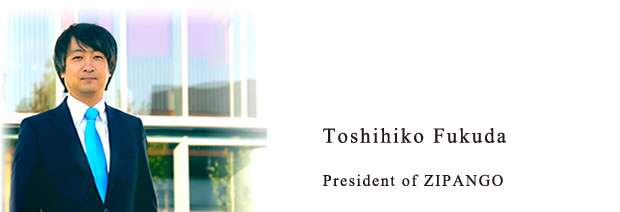
I believe that many Spaniards continue to think that Japan is a very distant country,
but actually, Tokyo airport is only two films and a few hours of sleep away by plane.
Japan and Spain can be excellent partners. In fact, they already are. In 2011, some 330,000 Japanese visited Spain, 45% more than the previous year.
This means that there is a growing interest in Spain among the Japanese.
International relationship between Spain and Japan started quite long time ago In 1549,
St. Francis Xavier (a Spanish Saint who is very popular among the Japanese, for sure)
arrived in Japan as a missionary, possibly the first Spaniard to reach this country.
But Spaniards were not the only ones who were curious to discover other countries.
In 1613, Tsunenaga Hasekura (called "Faxicura" in Europe) at the head of group of
180 Japanese, embarked on a trip to Spain to establish trade relations.
After crossing the Pacific and Atlantic Oceans, in early 1615, they were received by King Philip III of Spain.
The group stayed for some time in the Coría del Río area, near Seville.
It is said that people having the surname "Japón" in this area are the descendants of the Japanese from this Hasekura delegation who remained in Spain.
During the years that I have been here, I have observed several differences in work methodology between Spain and Japan.
Perhaps, in many aspects, Japan is one of the most systematic and methodical countries.
Projects in Japan are managed on a basis of meticulous planning, whereby the most important aspect of these projects is the fulfilment of each step.
It is a sure but rigid method at the same time, and is sometimes complicated by unforeseen circumstances.
Organization in Spain is more flexible.
People frequently seem to know that it is not always easy to execute plans exactly.
Spaniards easily adapt plans and have a talent for improvisation.
At the same time, when required, they devote maximum levels of concentration to increase project execution speed without affecting the good quality of the work.
This gives the impression of being somewhat uncertain at first, but in the end – despite unforeseen events, which normally occur – it is very efficient.
Both methodologies are different, but equally efficient. One can complement the other.
When we work with people from different cultures, the ideal is to try to get the best of both worlds.
I have verified that this is possible and highly productive.
Japan is a large, powerful and dynamic market but it also has its own peculiarities.
It is a market where it is not easy to open the first door. However, once you are inside, it is loyal to those who are loyal and honest in dealing with it.
ZIPANGO seeks to facilitate the growth of European Companies as their professional partner in numerous sectors such as IT, import, export, mobile phone business, literature, etc.
We will be delighted to help you to develop your business projects in Japan.